
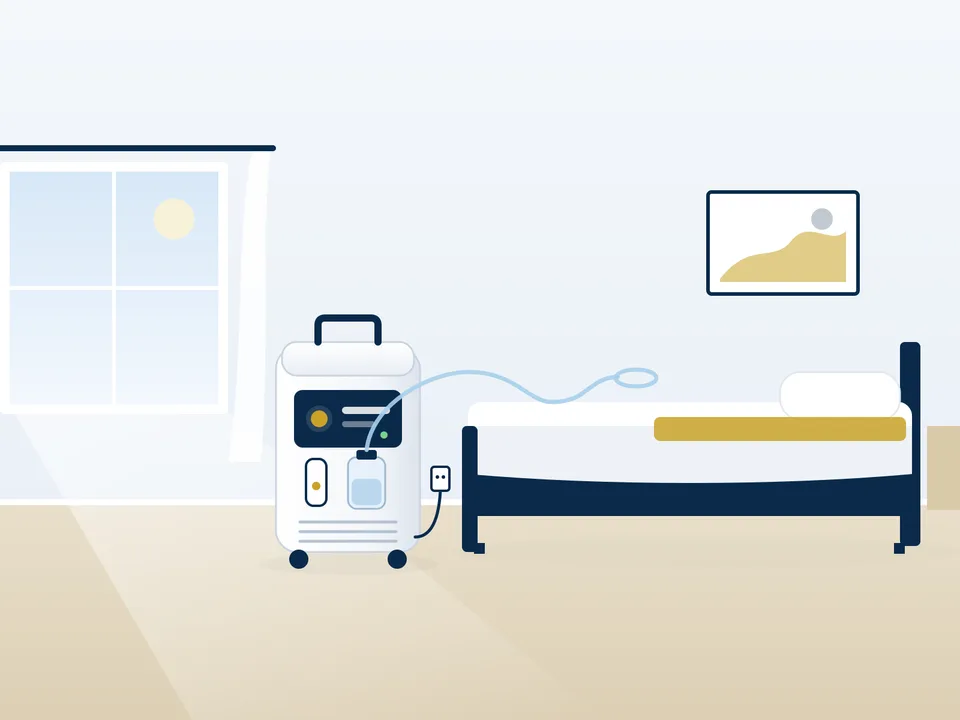
When a doctor advises oxygen therapy at home, families usually have a day or two to arrange it. It may follow a hospital discharge, recovery from a lung infection or a long-term breathing condition. For many households in Dombivli, Kalyan, Thane, Mumbai and Navi Mumbai, taking an oxygen concentrator on rent is the quickest and most practical way to set this up.
Renting is not only about finding the nearest supplier, though. The machine must match the doctor's prescription, run safely in your home and keep working for as long as you need it. This guide explains what an oxygen concentrator does, when renting makes more sense than buying, which specifications to check, what to ask a rental provider and how to keep the patient and home safe.
What is an oxygen concentrator and how does it work?
An oxygen concentrator is an electrically powered medical device. It draws in room air, filters out most of the nitrogen and delivers oxygen-rich air through a nasal cannula or mask, as the US FDA explains. Unlike an oxygen cylinder, it never needs refilling. It keeps producing oxygen as long as it has power.
There are two broad types:
- Stationary (home) concentrators: larger units on wheels, built for continuous use at home. Standard models deliver up to 5 litres per minute (LPM), and high-flow units deliver up to 10 LPM (Philips).
- Portable oxygen concentrators: smaller, battery-operated units for patients who move around or travel. Many work in pulse-dose mode, releasing oxygen only when the patient breathes in.
Important: an oxygen concentrator is a prescription device. The doctor decides how much oxygen the patient needs and for how long. Families should never change the flow setting on their own, a point the American Lung Association also stresses.
When does renting an oxygen concentrator make sense?
Renting suits situations where the need is temporary or not yet certain:
- Recovery after hospitalisation, surgery or a respiratory infection
- Short-term oxygen support during a treatment phase
- Elderly patients whose doctor wants to review the need after a few weeks
- Palliative care at home
- Trying a machine at home before deciding whether to buy one
Buying may be more practical when the doctor confirms long-term oxygen therapy over many months or years. Ask the doctor how long oxygen support is likely to be needed; that answer usually settles the decision.
Rent vs buy: a quick comparison
| Factor | Renting | Buying |
|---|---|---|
| Upfront cost | Lower: monthly rent plus a deposit, as per the provider's terms | Full purchase price at once |
| Best for | Short-term or uncertain need | Confirmed long-term therapy |
| Servicing | Usually handled by the rental provider | Arranged by the owner after warranty |
| Flexibility | Return or change the model when needs change | Fixed with the model you bought |
Key specifications to check before you rent
The doctor's prescription is your reference point. Share it with the rental provider so they can suggest a suitable machine, then check these five points.
1. Flow rate (LPM)
Flow is measured in litres per minute. A 5 litre oxygen concentrator covers many home prescriptions, while a 10 LPM oxygen concentrator is used when the doctor prescribes a higher flow. Make sure the machine's maximum flow is above the prescribed setting, not right at its limit.
2. Oxygen purity
Concentrators are generally considered high purity at about 90% and above (HD Supply respiratory guide). Ask whether the unit shows purity on a display or has a low-purity alarm.
3. Continuous flow vs pulse dose
Home concentrators give continuous flow, a steady stream whether the patient is breathing in or out. Portable units often use pulse dose. The two are not interchangeable: a pulse setting of 2 is not the same as 2 LPM of continuous flow (Oxygen Concentrator Supplies). Let the doctor decide which mode is right.
4. Alarms and safety features
Look for alarms for low oxygen purity, power failure and blocked flow. The FDA advises checking the device periodically for alarms to confirm the patient is getting enough oxygen.
5. Noise, size and power use
The machine may run all night beside the patient's bed. Ask about its noise level, weight and power consumption, especially if your home relies on an inverter during power cuts.
Questions to ask an oxygen concentrator rental provider
Before you confirm a rental, ask:
- Is the machine cleaned and serviced before delivery? Will new tubing and a nasal cannula be provided?
- Who will install it and show the family how to use it?
- What are the monthly rent, deposit and delivery charges, and how is the deposit refunded?
- Is there a minimum rental period? Can we extend the rental or return the machine early?
- If the machine stops working or an alarm goes off, whom do we call, and during what hours?
- Can you arrange a backup oxygen cylinder for power cuts?
- Can you also arrange related support, such as a pulse oximeter, home nursing or a doctor's home visit?
A dependable provider answers these clearly and puts the commercial terms in writing.
Delivery day checklist for families
When the concentrator arrives:
- Place it in an open, well-ventilated spot, a few inches from walls and curtains, with nothing on top (American Lung Association).
- Keep the air vents clear; blocked vents can affect performance (US FDA).
- Plug it directly into a wall socket. Avoid extension boards shared with other appliances (OSF HealthCare).
- Check that the humidifier bottle, filter and tubing are clean and fitted correctly.
- Ask the technician to demonstrate start-up, shut-down, filter cleaning and what each alarm means.
- Confirm the flow is set exactly as prescribed, and write the setting down.
- Save the provider's support number on more than one family member's phone.
Oxygen safety at home
Oxygen does not burn by itself, but it makes other materials catch fire more easily and burn faster and hotter (Government of Ontario). Families should:
- Never allow smoking near the patient or the machine.
- Keep the concentrator and tubing away from open flames, including gas stoves, diyas, agarbattis and candles. The Lancashire Fire and Rescue Service advises no naked flames within three metres.
- Avoid oil- or petroleum-based creams and lip balms on the patient's face (Mass.gov).
- Never drape a bedsheet, blanket or cloth over the concentrator (OSF HealthCare).
- Switch the machine off when it is not in use.
- Keep a working smoke alarm and fire extinguisher at home.
Planning for power cuts
A concentrator stops working the moment power fails. Discuss a backup plan with the doctor and the rental provider before you need it, for example a standby oxygen cylinder or a suitable inverter. This matters most for patients who need oxygen continuously.
Watching the patient: when to call the doctor
A pulse oximeter helps families keep a record of readings at home, but the doctor should interpret them. The FDA lists bluish lips or nails, shortness of breath, chest pain and a racing pulse as possible signs of low oxygen. It also notes that some people with low oxygen show no symptoms.
Contact the doctor promptly if breathing gets worse or readings change. In an emergency, dial 108 for an emergency ambulance or 112 for emergency services in Maharashtra. A rented machine supports treatment; it does not replace medical supervision.
Oxygen concentrator on rent in Dombivli, Kalyan, Thane, Mumbai and Navi Mumbai
Kritesh Enterprises provides medical equipment on rent and for sale, along with home healthcare services, across Mumbai, Thane, Navi Mumbai, Dombivli and Kalyan. If your doctor has advised home oxygen therapy, our team can explain the options, confirm current availability and arrange the rental for as long as you need it, with no fixed minimum period.
We offer both 5 LPM and 10 LPM oxygen concentrators on rent, and every machine is cleaned and serviced before delivery. We can also provide a backup oxygen cylinder for power cuts and a pulse oximeter for keeping track of readings. Where required, we can also arrange home nursing or a doctor's home visit. If the doctor has prescribed a BiPAP or CPAP machine as well, we rent those too. For other equipment, see our guide to medical equipment on rent.
Frequently asked questions
Do I need a doctor's prescription to rent an oxygen concentrator?
Yes, you should have one. An oxygen concentrator is a prescription medical device, and the doctor decides the flow rate and duration of oxygen therapy. Share the prescription with the rental provider so they can suggest a suitable machine.
Should I rent a 5 litre or a 10 LPM oxygen concentrator?
It depends on the flow your doctor prescribes. A 5 LPM machine covers many home prescriptions, and a 10 LPM machine is used for higher prescribed flow. Ask the doctor before choosing, and never raise the flow on your own.
How long can I keep an oxygen concentrator on rent?
Rental periods vary by provider. At Kritesh Enterprises, the rental period is as per your requirement, with no fixed minimum, and you can discuss extending or ending it with our team.
Is it better to rent or buy an oxygen concentrator?
Renting usually suits short-term or uncertain needs, such as recovery after hospitalisation. Buying may make more sense when the doctor confirms long-term oxygen therapy. Ask the doctor how long oxygen support is likely to be needed.
What happens to an oxygen concentrator during a power cut?
It stops working, because it runs on electricity. Plan a backup with your doctor and rental provider in advance, such as a standby oxygen cylinder or a suitable inverter, especially if the patient needs oxygen continuously.
Is it safe to use an oxygen concentrator at home?
Yes, when it is used as prescribed and with basic precautions. Keep it away from open flames and smoking, place it in a ventilated spot, keep vents uncovered and plug it directly into a wall socket.
Can I get an oxygen concentrator on rent in Thane or Navi Mumbai?
Kritesh Enterprises serves Mumbai, Thane, Navi Mumbai, Dombivli and Kalyan. Call or WhatsApp us to confirm current availability and delivery for your location.
Setting up oxygen at home with confidence
Renting an oxygen concentrator lets families start home oxygen therapy quickly, without a large upfront cost. Start with the doctor's prescription, check the flow rate, purity and alarms, ask the provider the right questions and set up the machine safely. Plan for power cuts before they happen. Above all, keep the doctor involved: they decide the oxygen settings and how long therapy should continue.
Need an oxygen concentrator on rent? Call or WhatsApp Kritesh Enterprises on +91 95945 34316 (Monday to Sunday, 10 am to 8 pm), or send an enquiry. Share your doctor's prescription and we will confirm current availability and guide you on the next steps.
This article is for general information only and is not medical advice. Always follow the guidance of your doctor for diagnosis, treatment and oxygen settings.